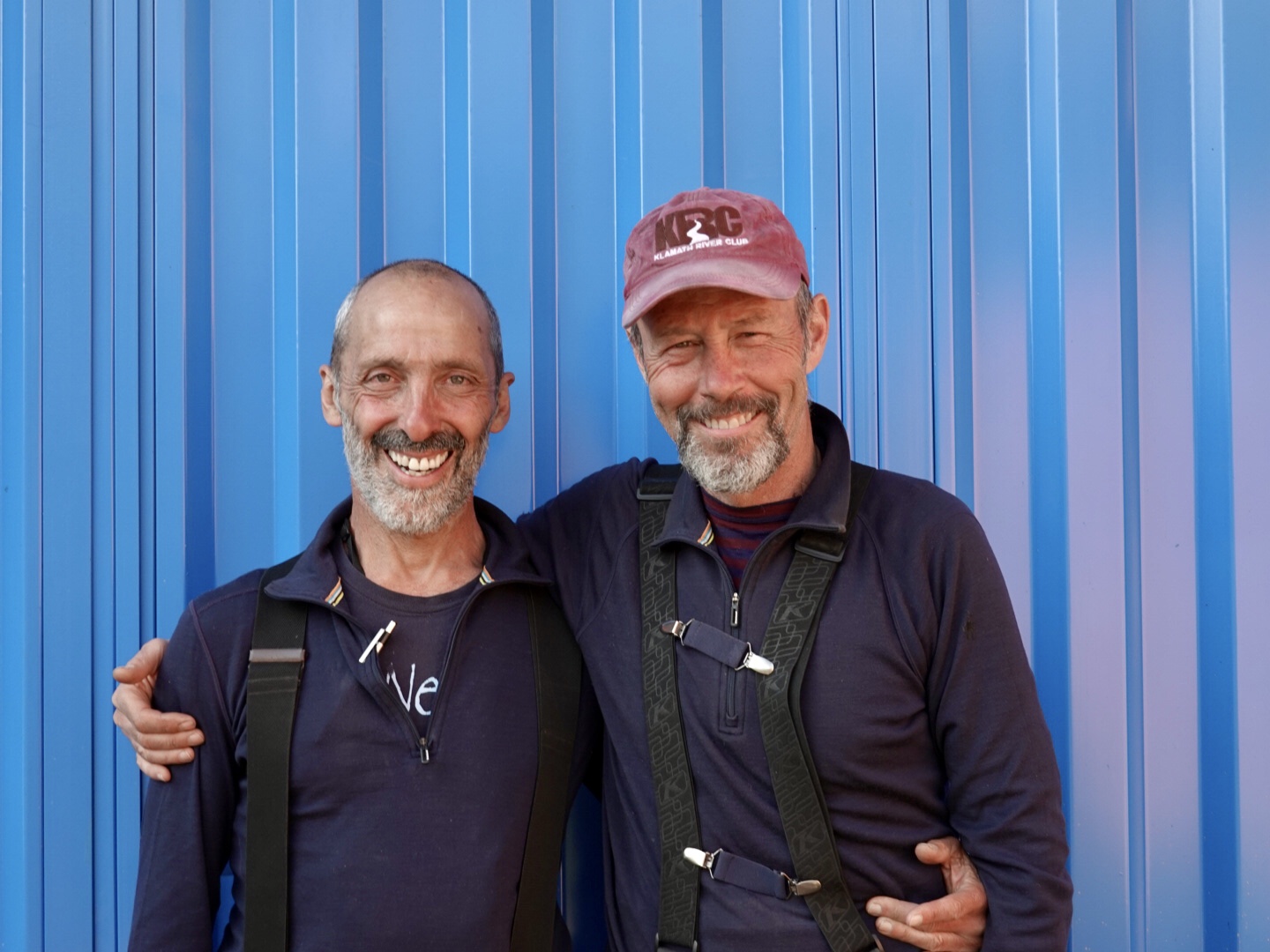
Today was the ‘actual’ final day of our journey. We started the day in the non-descript town of Cusipata, which is on the main road 51 miles south of Cusco. Given the distance, and the fact that we would be traveling on a main highway, we expected to arrive in Cusco around noon. Little did we know, we wouldn’t end up arriving until 5:30 due to a general strike that had been called in the Cusco region the evening prior.
We had been warned of the general strike by our hotel manager the night before and so we anticipated we’d experience some delay, but not 6 hours. You may recall that we’d had to make our way around a road block associated with an earlier general strike a few weeks prior north of Lima as we made our way down the coast, but that time, once we made it past the one roadblock it was clear sailing for the rest of the day. This time around we were not so lucky.
Unlike the first strike which appeared to be more of an ‘urban’ protest against the general inflation and spiraling gasoline prices, this one was more of a ‘rural’ protest on driven by the dissatisfaction of the campesino’s (field workers) in the mountains south of Cusco with the government. What we learned in talking to a local is that there has been a 3-4 fold increase in the price of fertilizer and a corresponding 3-4 fold decrease in the price paid for certain commodities including Coca. We also learned that there is a general perception that the President is ‘in the pocket’ of a group of large corporations at the expense of the common people. True or not, that’s the perception and that’s all that counts.
Either way, as we made our way up the road towards Cusco, we experienced an ongoing series of roadblocks in each of the small towns/cities we passed through. We made it through the first 10 or so we encountered by expressing our sympathy with the protest and patiently explaining we were from ‘Los Estados Unidos’, concluding a month long trip, during which we’d contributed ‘mucho dinero’ to the local economy and that today was the last day of our journey and needed to return our rental motorcycles in Cusco. In several instances, our presence prompted heated debate between the protesters, but each time we prevailed after 10 minutes or so. At one blockade it took us 20-30 minutes and with the resolution being that they would let us pass if we would agree to allow them write “Viva El Paro” (strength to the strike) on our windshields.
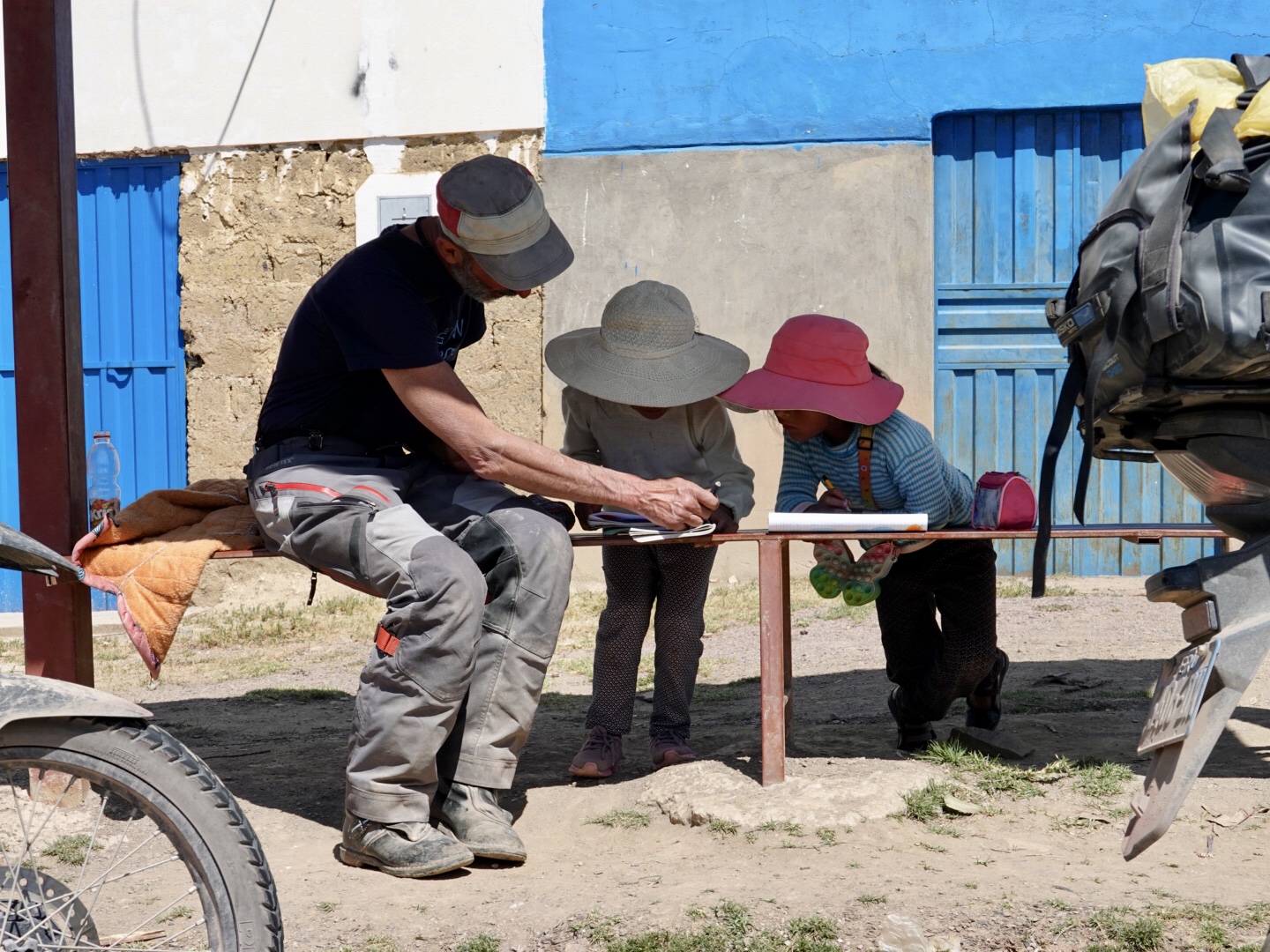
As we approached the largest city on the map… the city of Urco… we anticipated a major blockade and so decided to try our luck at detouring off of the main highway to see if we could make our way around, but about 10 miles in, we ran into another blockade. We thought perhaps that off the main highway the protesters would be less adamant, but we found the opposite to be true and so had to turn around and return back to the main highway. As we retreated, we decided to take a break and stop in a small town for some food. As we waited for our food to be prepared (hard boiled eggs and boiled potatoes), Claudio befriended two little girls (6 and 7), and proceeded to spend the next hour engaging them in a Waldorf inspired storytelling/drawing/writing exercise. Suffice it to say, the experience was hugely satisfying for both teacher and pupils. Claudio had absolutely charmed (and been charmed) by the two girls, who, as we got ready to depart, innocently asked when he would be returning.
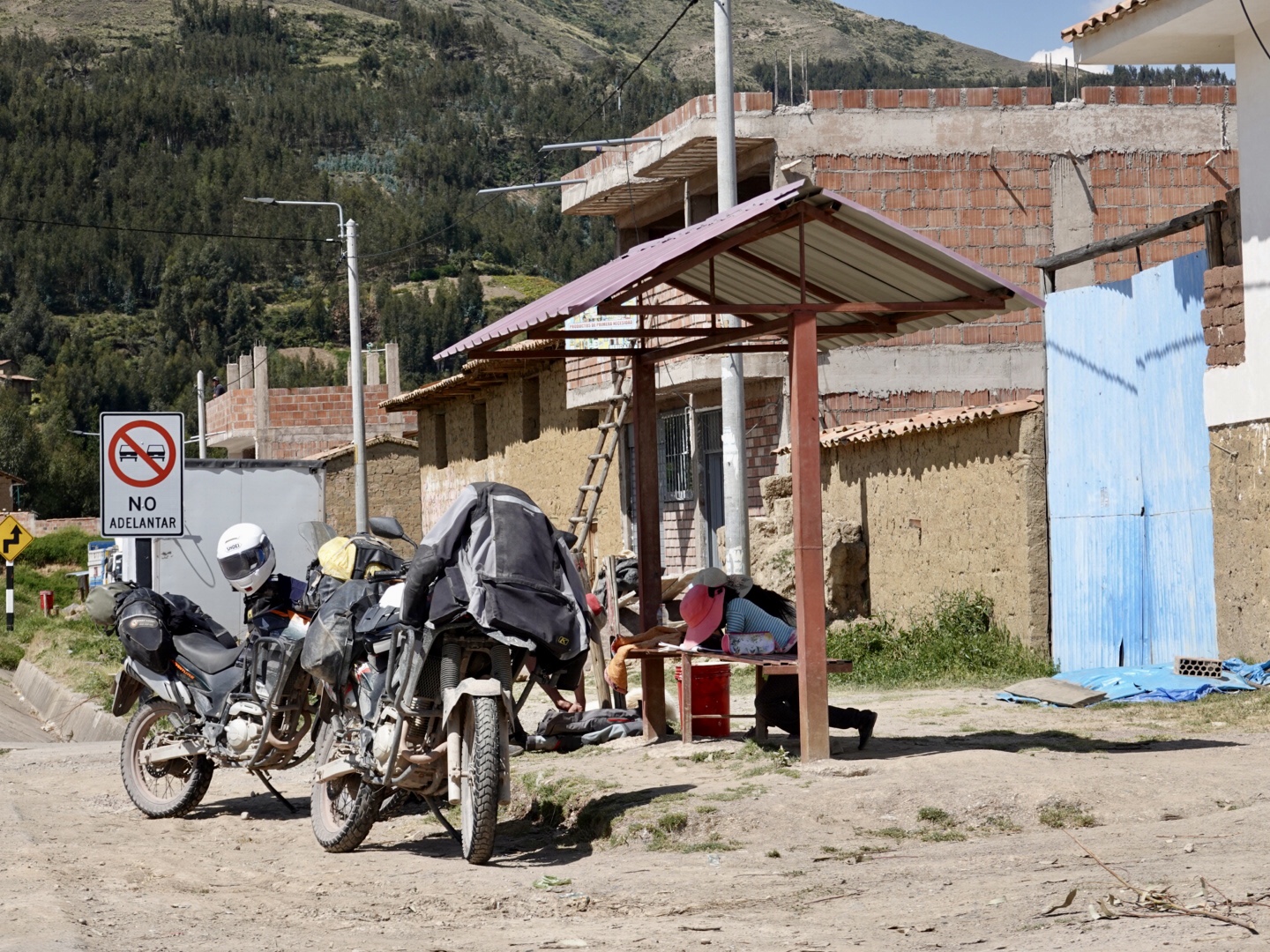
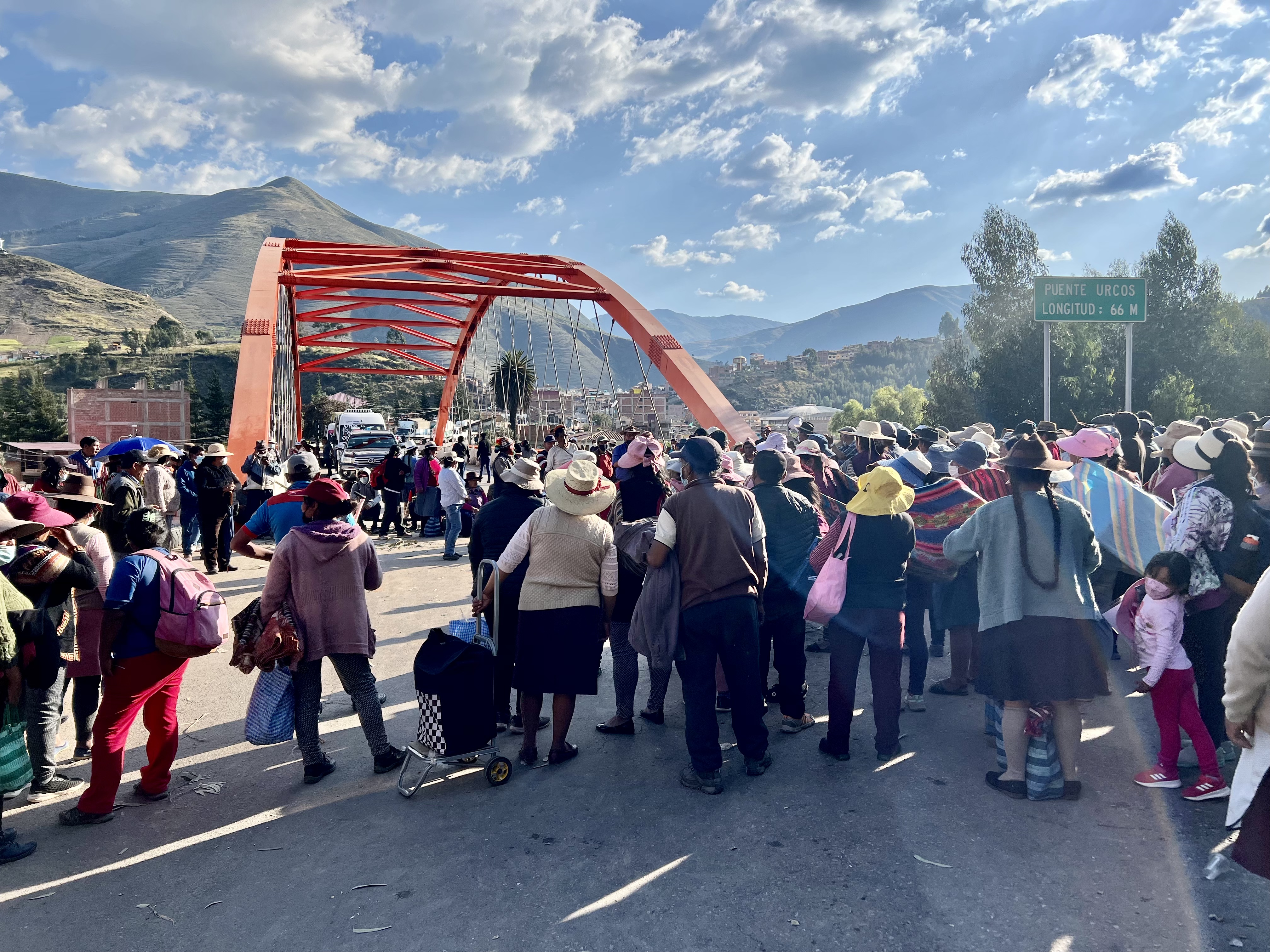
Back on the main highway, our luck finally ran out in the city of Urco. As we approached the bridge into the main part of the city, we passed a column of cars, trucks and buses a KM or so long. When we finally reached the bridge we found several hundred protesters who had taken a defiant stand and were not letting anyone pass. At this point, it was around 1:00. We were told that at 4:00 the strikers would allow traffic to pass for several hours and so, with no other choice we settled in for the next several hours.
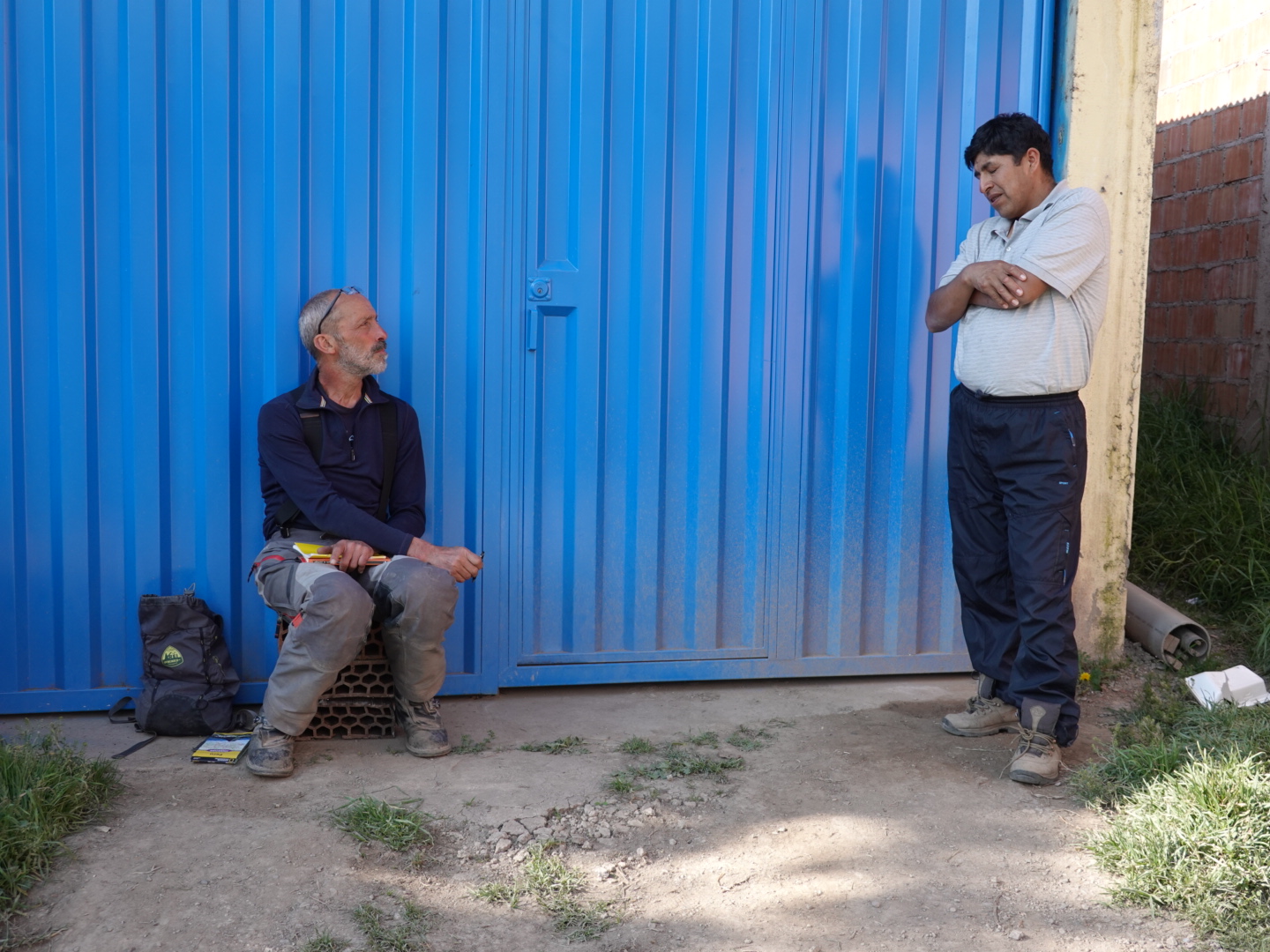
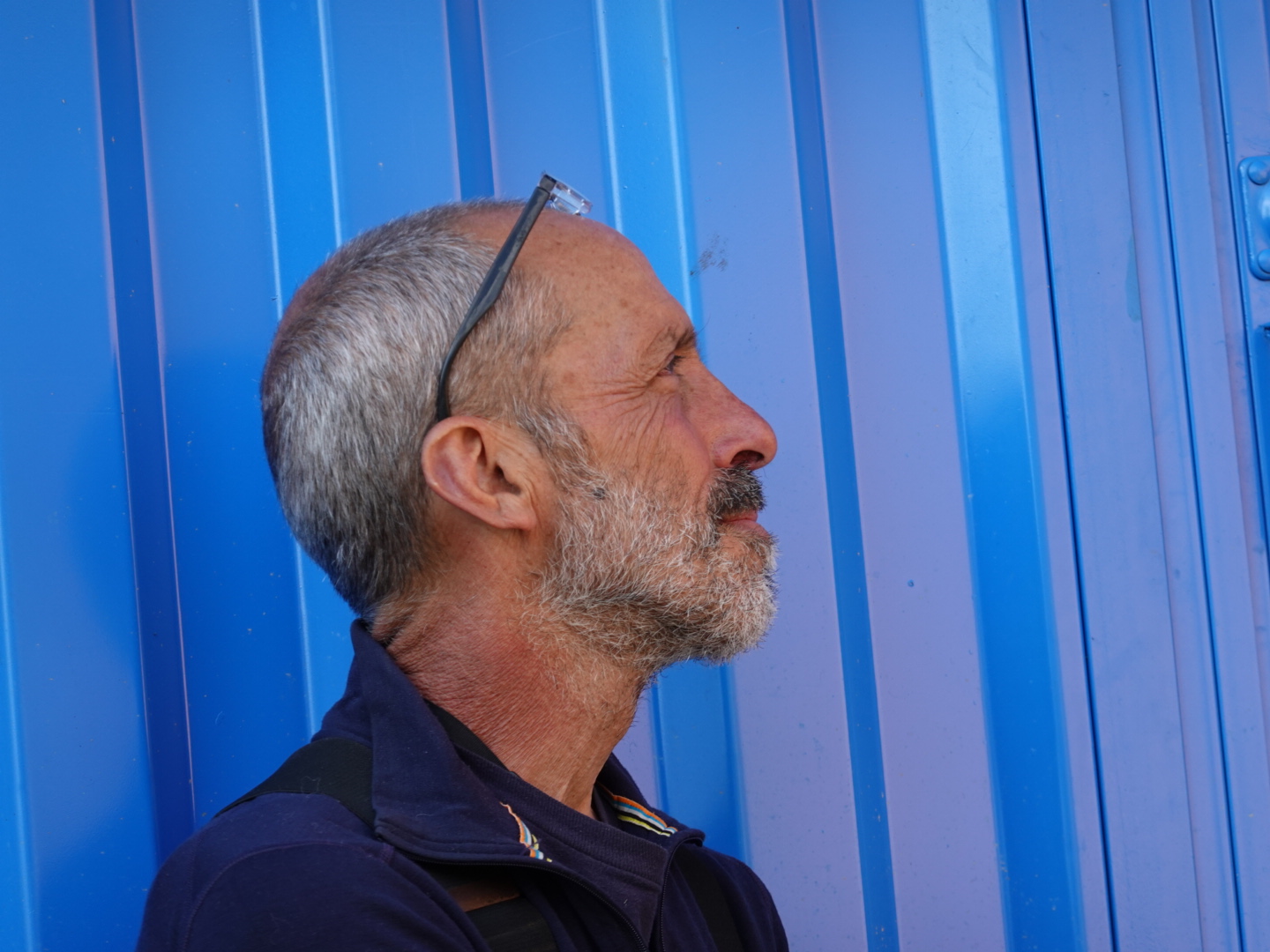
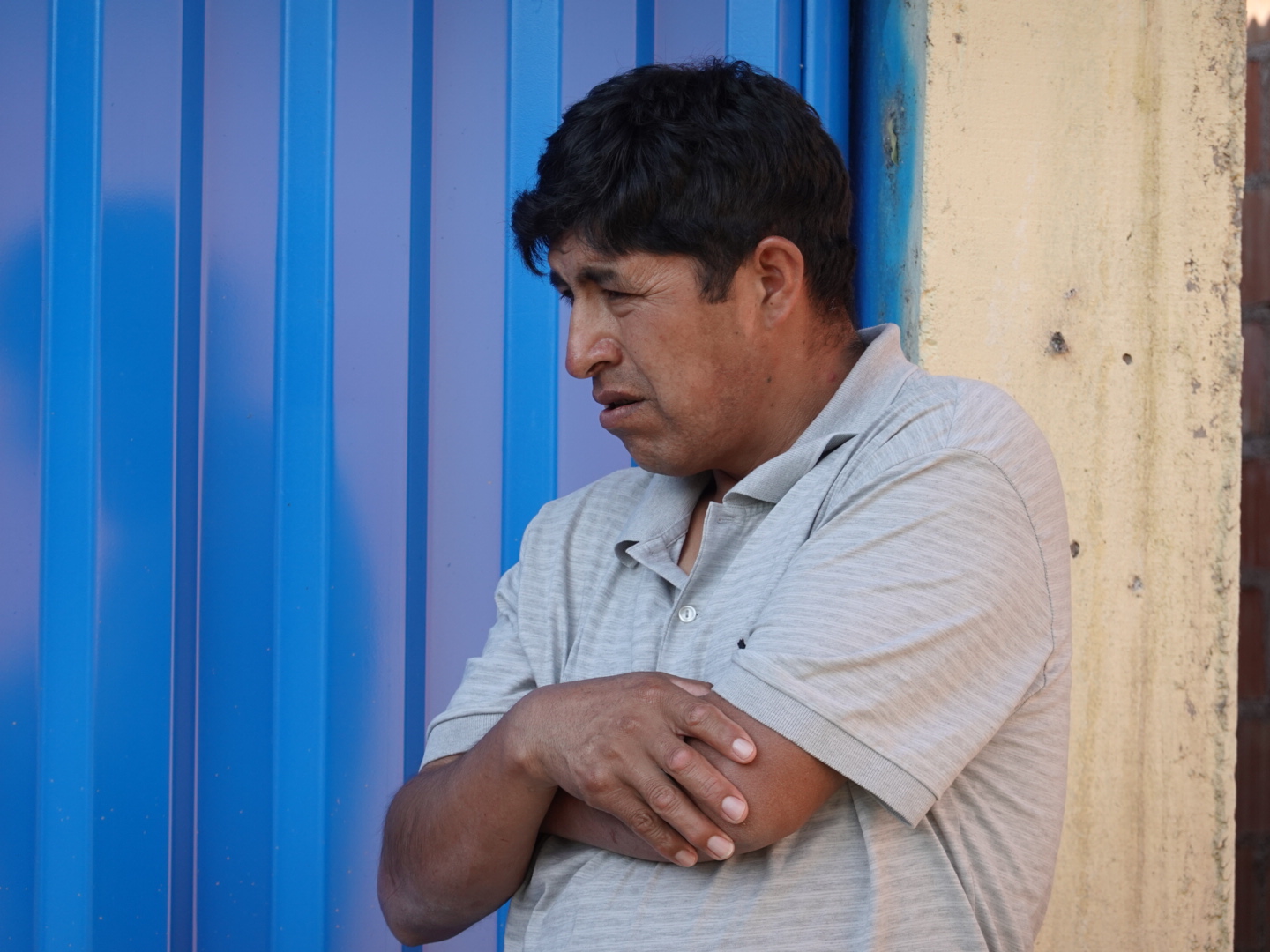
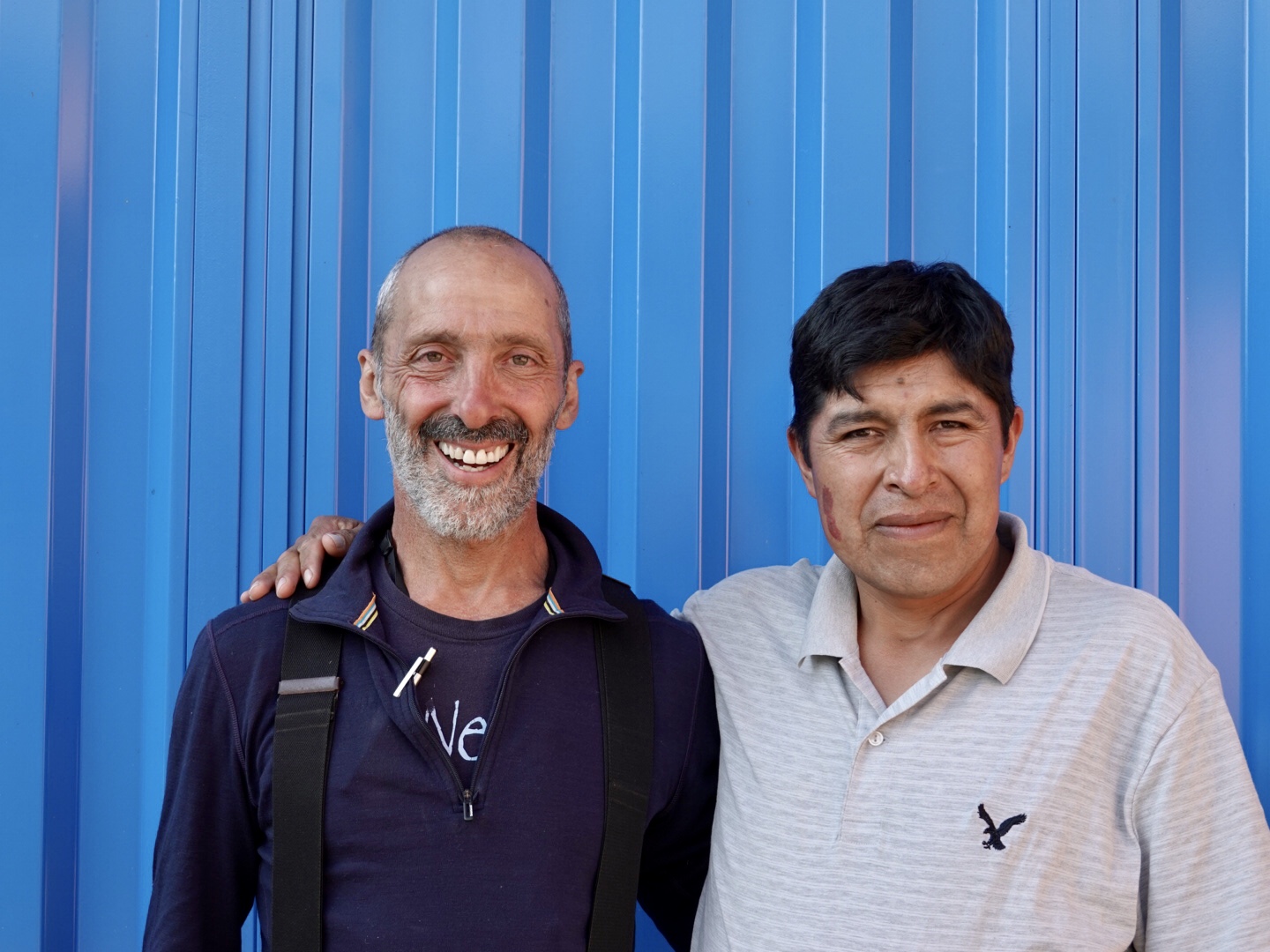
Our immediate goal became to find shade from the mid-day sun. Claudio quickly spotted a driveway near the bridge that led us behind a couple of buildings towards the river. After few hundred yards, we parked ourselves beneath the shade of a tree. An hour or so into this sojourn we were joined by the gentleman who owned the building we’d parked behind. Claudio engaged him in conversation and solicited his perspective on the protest. Turns out, this gentleman, a small business owner, was not terribly sympathetic to the protesters, but at the same time shared a common frustration with the current president and his government.
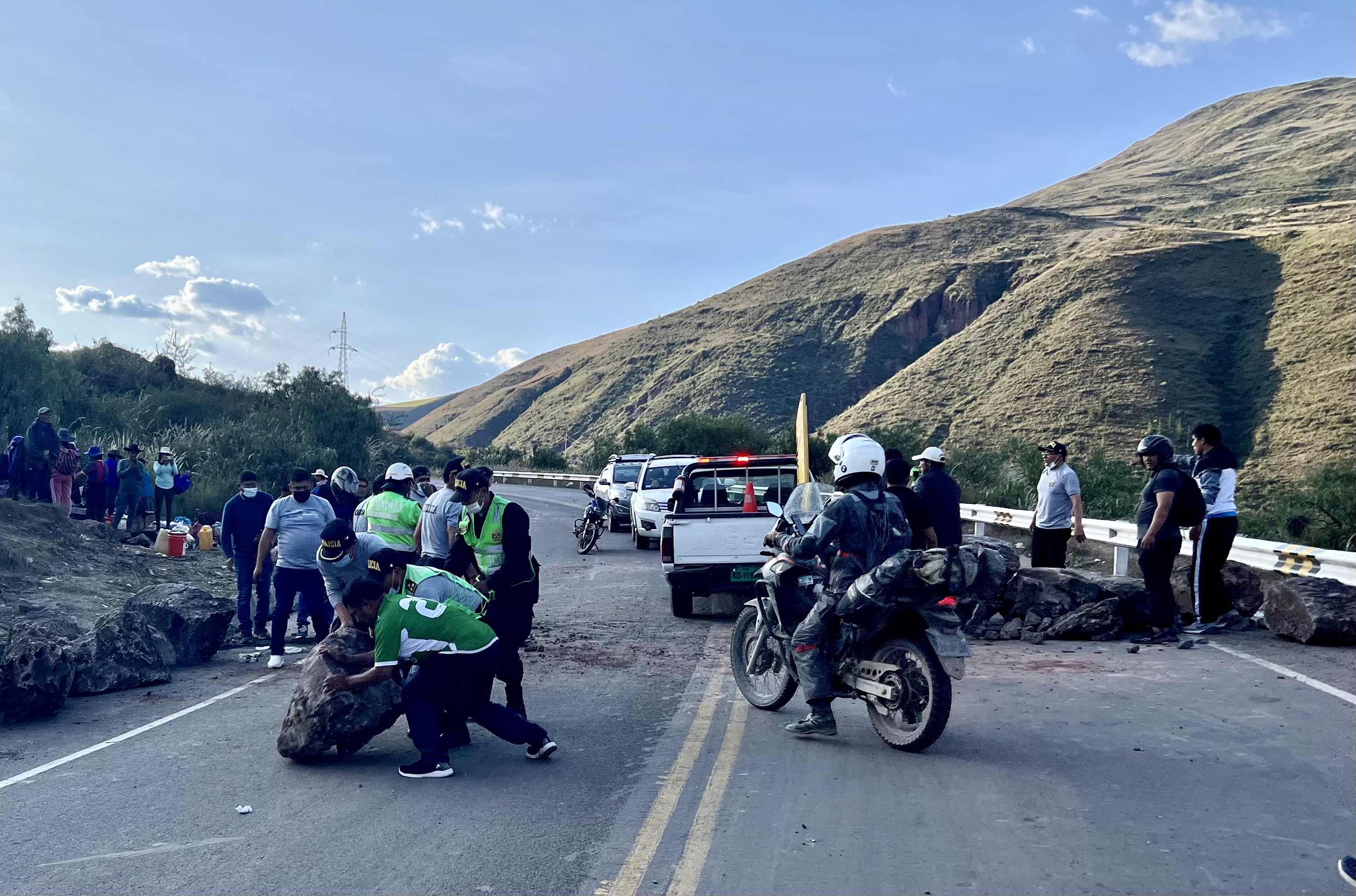
Finally at just after 4:00, true to their word, the protesters removed the barricade of Eucalyptus tree trunks they’d constructed and allowed traffic to pass. Given that we were on bikes, we were at the head of the line as the barrier was removed. From this point onward over the next 30 miles, we encountered the remnants of another dozen blockades consisting of tree trunks and branches, large boulders, mounds of dirt and, in one instance, a section of guard rail that had been bent across the highway. We also encountered one barricade where a group of protesters were holding out and threatened to block our passage before acknowledging the situation and agreeing to let us pass. If we hadn’t been on bikes we would never have made it, but ultimately we arrived at the motorcycle rental company in Cusco at 5:30.
After dismounting one last time, Claudio and I embraced and, recognizing our journey had finally come to an end, succumbed to the emotion of the moment. We expressed our deep gratitude to the other for having made the journey possible together with our relief at having brought the journey to a safe conclusion. As we walked away from the shop, we both felt a deep sense of satisfaction and gratitude for an experience that we will carry with us the rest of our lives.
From Claudio
Idiosyncrasies
Soccer fields and Bullrings
Every village has a soccer field. Every third or fourth village has soccer field and a bullring.
Capillas
After 4,000 kilometers I can attest that every 5 to 10 kilometers, on the shoulders of every road, there is a small capilla -chapel- marking a death place from a car accident. On mountain roads the capillas are always on the precipice side of the curves.
Aqueducts
The higher we are, the more water we see vigorously running down crevices and creeks from which water is channeled via stone, concrete or hose aqueducts to supply water to villages.
Skin I
Seldom, we see more skin of Peruvians than that of their faces and hands. They wear long sleeves, pants, and leggings under skirts.
Skin II
Car washes in Peru -and there are many, many of them- are universally advertised by very large, colorful billboards showing sexy, voluptuous, bikinied, Caucasian girls exhibiting their fleshy curves, often standing in front of a wet, foamy car, in a feline pose as if about to copulate, their backs slightly to the viewer to fully appreciate the girl’s behind and long legs. Loose hair cascades down their backs with a red-lipped kiss to you, the owner of a dirty car.
Leashed
To a post, a bush, or just dragging their leashes behind them, the vast zoology of farm animals can be seen on roads and streets. Pigs, mules, donkeys, cows, sheep, llamas. Cautiously they walk on the shoulders trailing their shepherds. Dogs don’t belong to the leashed family.
China
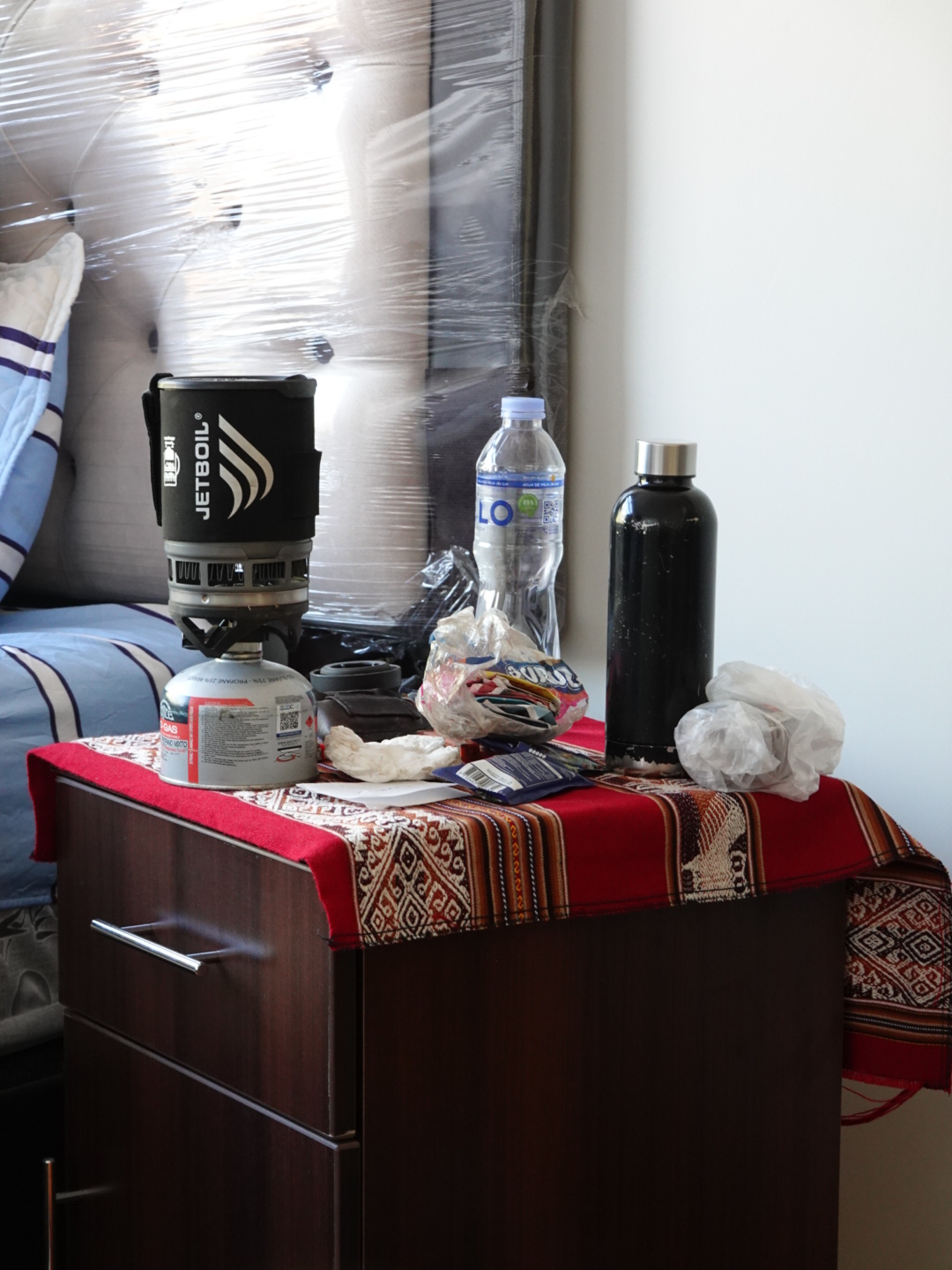
With names such as Rocco, Bronco, Sumo, YengZu, Chinese motorcycles are everywhere. Small engine -100 to 200 cc-, Honda-look-alike, with 1, 2, 3, or 4 passengers. Three-wheeled Chinese moto-taxis zipping everywhere in towns and villages. Three-wheeled Chinese moto-cargo with a 6 ft bed loaded with anything imaginable. And chaufa -Chinese rice- proudly served in every restaurant.
Claxon
Horns are honked forcefully, aggressively, aggravatingly, rapid fire style, invitingly, maddeningly. Everywhete. Taxis and moto-taxis drive around honking their cláxones while gesturing at possible passengers. Loaded buses blast their horns; empty buses too. Big trucks announce their heft with their stentorian cláxones; small toy-like cars blow their high pitched whistles just in case. A veritable allegro sostenuto.
Boticas
Pharmacies abound, to a disconcerting degree. I counted 7 in one block, with more on the adjacent streets, just in case. Pharmacists listen to your needs and give advice accordingly. They don’t sell you the whole box, or container of pills: they suggest how many you may need, open the container, count the pills, bag them in tiny home made paper envelopes and charge you per unit. Voilà.
Vote for Me
Politicians canvas the country and plaster the entrances of every village large and small with their billboards. A Rogelio Ruiz promises to help the community by fighting against tractors. “No a los Tractores!” His logo is a hoe.
 Peruvian Adventure
Freddy & Claudio, fantastic reporting; informative and poetic. thanks so much for taking me along. Viva El Paro!
LikeLike
Dewey… ‘thanks!’ and thanks for following along and all of your comments… they are/were very much appreciated. Hope all is well with you and that we’ll find a time to get together sometime soon on one coast or another.
LikeLike
Congrats on a successful trip and the most informative and best organized trip report…EVER. I am so impressed with your stamina for rugged adventure.
Now the family arrives and the fun begins?
If you are in the sacred valley in Urubamba look up Pablo Seminario’s ceramics studio, and museum. He employs alot of the locals making cup and bowls and has built an amazing facility.
We had a great visit with him and his wife Diane.
LikeLike
Bill… thanks so much for your comments throughout the trip… very much appreciated. I look forward to sharing more upon my return (hope to make it out on Sunday 30th.
Yes… Nancy and the kids are now here and getting ready for our 5 day ‘Trek’. Wonderful to have them here… my cup truly runneth over!
We were in Urubabamba yesterday… didn’t see your note until too late, but thanks for thinking of me/us.
See you soon.
LikeLike
Wow. The end is so bitter-sweet. Thank you for taking us on this wonderful journey with stories, photos, videos, and maps. I’m smiling ear to ear with excitement and joy. I now want to hit the road again having traveled in some of those parts of Peru, and now seeing more of this amazing country through your eyes.
LikeLike
Michael… thanks for your comment. Very much appreciate you taking the time to follow along and glad you enjoyed it. Regarding your thought to re-visit Peru… just do it! :). When the time comes I’m happy to share what I’ve learned.
LikeLike
Thank you for sharing your journey. My heart was inspired and warmed by your account. I met Claudio in Baja in 2019 and enjoyed several days of his company.
Thank you from Seattle
LikeLike
Mark… thanks for your comment and for following along. Hopefully we’ll get a chance to meet some time.
LikeLike
Freddy – Congrats to you and Claudio on the successful and inspiring trip and many thanks for the narratives! Very interesting. All the best, Charles
LikeLike
Charles,
Thanks for the note and thanks for following along.
-Freddy
LikeLike